|
On nostalgia, fantasy, and the truths they obscure… ͏ ͏ ͏ ͏ ͏ ͏ ͏ ͏ ͏ ͏ ͏ ͏ ͏ ͏ ͏ ͏ ͏ ͏ ͏ ͏ ͏ ͏ ͏ ͏ ͏ ͏ ͏ ͏ ͏ ͏ ͏ ͏ ͏ ͏ ͏ ͏ ͏ ͏ ͏ ͏ ͏ ͏ ͏ ͏ ͏ ͏ ͏ ͏ ͏ ͏ ͏ ͏ ͏ ͏ ͏ ͏ ͏ ͏ ͏ ͏ ͏ ͏ ͏ ͏ ͏ ͏ ͏ ͏ ͏ ͏ ͏ ͏ ͏ ͏ ͏ ͏ ͏ ͏ ͏ ͏ ͏ ͏ ͏ ͏ ͏ ͏ ͏ ͏ ͏ ͏ ͏ ͏ ͏ ͏ ͏ ͏ ͏ ͏ ͏ ͏ ͏ ͏ ͏ ͏ ͏ ͏ ͏ ͏ ͏ ͏ ͏ ͏ ͏ ͏ ͏ ͏ ͏ ͏ ͏ ͏ ͏ ͏ ͏ ͏ ͏ ͏ ͏ ͏ ͏ ͏ ͏ ͏ ͏ ͏ ͏ ͏ ͏ ͏ ͏ ͏ ͏ ͏ ͏ ͏ ͏ ͏ ͏ ͏ ͏ ͏ ͏ ͏ ͏ ͏ ͏ ͏ ͏ ͏ ͏ ͏ ͏ ͏ ͏ ͏ ͏ ͏ ͏ ͏ ͏ ͏ ͏ ͏ ͏ ͏ ͏ ͏ ͏ ͏ ͏ ͏ ͏ ͏ ͏ ͏ ͏ ͏ ͏ ͏ ͏ ͏ ͏ ͏ ͏ ͏ ͏ ͏ ͏ ͏ ͏ ͏ ͏ ͏ ͏ ͏ ͏ ͏ ͏ ͏ ͏ ͏ ͏ ͏ ͏ ͏ ͏ ͏ ͏ ͏ ͏ ͏ ͏ ͏ ͏ ͏ ͏ ͏ ͏ ͏ ͏ ͏ ͏ ͏ ͏ ͏ ͏ ͏ ͏ ͏ ͏ ͏ ͏ ͏ ͏ ͏ ͏ ͏ ͏ ͏ ͏ ͏ ͏ ͏ ͏ ͏ ͏
|
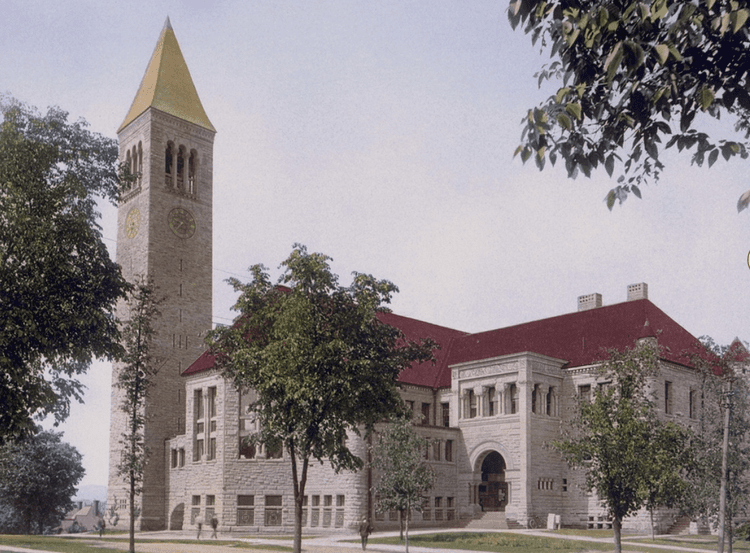
Welcome to the October edition of Thinkers Who Mother—I’m so glad you’re here. This past summer, I took my oldest, a high school junior, on a college tour that included my alma mater Cornell. I’d been looking forward to this trip all summer, excited to share old memories as I showed my daughter my favorite campus spots: Goldwyn Smith Hall, where I took classes with the professor who changed my life; the Cornell Dairy Bar, with its delicious ice cream made at the university’s own creamery; and the Uris Library lookout, with its obscenely beautiful views of Cayuga Lake and the surrounding hills. If you’ve ever toured your alma mater with your own college-bound child, maybe you can relate to the singular strangeness of this experience? I’m not sure there’s anything that matches its emotional and temporal layeredness.
|
|
My daughter, taking in the view of Lake Cayuga
|
|
During our two days in Ithaca, I felt as if I’d both traveled back in time and waded into the future. Nostalgia for my college years mingled with fantasies of my daughter’s, sweeping me up in the possibility that, if by some miracle she were to be accepted to Cornell—with its roughly eight percent admission rate—she might experience the best parts of my years there, too. Imagine how that might deepen our mother-daughter bond! Nostalgia and fantasy are an intoxicating combination. So intoxicating that I found myself minimizing the less positive aspects of my time at Cornell, many of them tied to its prominent Greek system. I loved my professors and made friends who remain a vital part of my life. But I also struggled to feel at home on a campus so dominated, socially, by Greek life—a hierarchical and often dangerous world I’d glimpsed from within before deciding it wasn’t for me. I said little to my daughter much about the misogyny, groupthink, and abuse of male power I witnessed in that world. Instead, I played the neutral tour guide, giving her space to form her own opinions. “Greek life isn’t for everyone!” I offered breezily,and left it at that. Surely, I thought—but did not confirm—the school’s Greek culture has changed for the better since then.
|
|
Me (at right, clutching a pack of Marlboro Lights) during my brief foray into Greek life, 1995.
|
|
Less than a month later, Jane Doe filed the sexual assault lawsuit that would thrust Cornell and its fraternities into the spotlight. The school’s Greek system, it turned out, had not changed for the better—and it seemed likely it had gotten worse. Since this lawsuit became public, I’ve been thinking about how easy it can be for us, as parents, to ignore our own intuition out of optimism or denial. I wanted so badly to trust in Cornell’s overarching goodness and to believe that my daughter, were she to apply and be accepted, could escape its darker aspects. But by shielding her from these realities, I wasn’t protecting her. I was limiting her ability to make an informed choice. Last week, I corralled my swirling thoughts into an essay for WBUR’s Cognoscenti, “What I’ll Teach My Children about the Greek System.” It examines the sexism baked into Greek life, but also how well-meaning adults become complicit when we downplay its harms and treat participation as a neutral lifestyle choice. That’s exactly what I’d done while walking across the Cornell campus with my arm over my daughter’s shoulder, glossing over the uglier truths of a place I wanted us both to wholeheartedly love. When I finished a draft, my daughter was one of the first people I shared it with. Since then we’ve had many rich conversations about the Greek system, gendered violence, consent, and what sort of environment will truly be the best for her after high school. This, too, has been a form of mother-daughter bonding, and a version I can feel—wholeheartedly—good about.
|
|
I don’t know about you, but I often find that whatever book I happen to be reading is precisely the one I need at the moment. Rachel León’s inventive and riveting debut novel How We See the Gray is just one of these books. I’ve been thinking a lot lately about the ways the institutions shape us. Even the most involved parents don’t raise their kids alone, but in concert with the communities children are part of—whether schools or teams or places of worship. León’s novel sheds light on the vital and often invisible role secondary “parents” play in the lives of young people—especially those whose birth parents are unable to shoulder the work of caregiving alone. León is a social worker as well as a writer and editor, and her two decades working in child welfare and the foster care system have given her the perfect vantage point from which to explore the complexities, rewards, and “gray areas” of this work. How We See the Gray is a compassionate look at the inevitable imperfection of caregiving, no matter how loving our intentions. I was so happy to have a chance to connect with León about her process, literary lodestars, and more! ——————- NGL: As a writer, I’ve always been interested in “the gray” and questions that defy clear-cut answers—so your title hooked me from the start! I’m curious how you came to land on it? RL: I’ve also always been interested in it as a writer—so it’s been fascinating to work in child welfare where I’m confronted with it daily. I wish I could remember exactly how the title came to me, but it was years ago, before there was even a “we” on the page. That title just encompassed the novel’s core. But because there wasn’t a “we,” I did try using a different title for a while, even though I liked “How We See the Gray” more. When the Greek chorus emerged, I switched back. NGL: Your two decades working in child welfare deeply inform your novel, whose protagonist Meredith is a social worker navigating the complicated intersection of foster parents, biological parents, and children. What made you want to write a novel rooted in this system? RL: I guess the short answer has a lot to do with my interest in the gray—there are so many ethically ambiguous situations that arise in this field, so many fascinating contradictions. But the more I worked on the novel, the bigger the story felt. I came to think of it as a social novel because I found myself drawn to using this story to highlight the system’s inequities and raise awareness. The foster care system is one many don’t interact with, so what a lot of people know is often based on inaccurate or stereotypical media representations; I wanted to offer a more nuanced portrait of the system. NGL: I love how you experiment with form in the book, incorporating case notes, mediation session notes, local new stories, and other fictional documents. How did you arrive at this hybrid approach? RL: I very much wanted to show what working in child welfare is like, and so much of the work is paperwork! Using forms, case notes, etc. allowed me to not only show that aspect of the job, it was also a device to convey information the reader needed to know, but that would’ve been boring to offer in straight exposition. And another big aspect of child welfare is the passage of time, a key component in change, and so the book is split into seasons. The novel is set in a specific city (my hometown of Rockford, Illinois) over a specific year and so the local news stories were meant to anchor the reader in time and place. NGL: Are there any particular books that guided you while you were writing How We See the Gray? Some literary lodestars? RL: Yes! The two main ones were Julia Alvarez’s ¡Yo! and Justin Torres’s We the Animals. ¡Yo! because that novel essentially is a portrait of one character told from the perspective of different people in her life—from her sister to her stalker. And each new POV complicates what the reader thinks about this complex woman. I love novels that do that, and I hoped to do the same here. We the Animals was an inspiration, not because it’s told in first person plural, but because that novel deals with trauma, yet it really centers love. I wanted to do something similar, infusing heart and hope in this story that deals with hard things. NGL: In addition to being a social worker, you’re an editor at Chicago Review of Books and a prolific reviewer for outlets like BOMB and The Rumpus. Was it hard, while you were writing, to quiet your inner book critic? RL: Yes and no. Yes to it being hard to quiet my inner critic, generally speaking, less so the book critic part. I can’t say I really identify as a book critic—I tend to say I do “book coverage” versus criticism. Which isn’t to say I don’t value book criticism, I do, but it’s hard enough to be a writer and put one’s work out there; I have no interest in taking anyone’s down. (Not that a critic has to!) We writers tend to have pretty loud inner critics—I think that’s part of being a person who thinks deeply—and I never want to add to that for anyone. So it’s my goal with my book coverage to build up other writers and help elevate their work; that’s what literary citizenship and community is all about. Which is a good time to mention how grateful I am for you doing that here, Nicole, with this interview. Writers supporting other writers is what it’s all about, isn’t it?
|
|
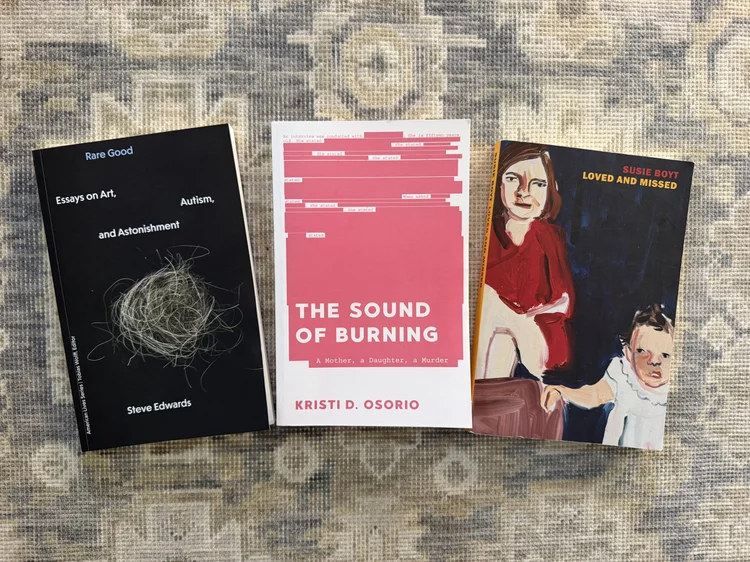
In the past couple months, I read three extraordinary books that—along with How We See the Gray (published by Northwestern University Press)—reminded me how culturally vital small presses are. Large commercial houses like Penguin Random House and Simon & Schuster publish many excellent books, of course. But often, I find the writing that most awes and inspires me in books by independent presses, which are less beholden to trends and market-pressures than larger houses. At a time when soulless AI “content” floods our reading lives, here are three gorgeous small press books that feel unmistakably human: Rare Good by Steve Edwards University of Nebraska Press I first encountered Steve Edwards’ wise, humble, and startling (in the best way) writing in The Sun, where some of the essays in this treasure of a collection were first published. Edwards was diagnosed with autism in his mid-thirties, and his writing illuminates how this revelation shifted his understanding of self and other, separateness and connection, despair and love. Every page captures the vastness of human emotion, and how even the smallest moments can contain this range. The Sound of Burning by Kristi D. Osorio University of Georgia Press When Osorio was fifteen, she experienced the unthinkable trauma of waking as her mother murdered her grandmother in the house where she slept. In this gutting and courageous memoir, Osorio uses memory and archival documents to understand not only the events of that night, but the reverberations of a coming-of-age interrupted by loss, grief, and maternal violence. This book’s beauty and honesty continue to haunt me. I’l be doing an event with Osorio in Cambridge on November 1 (see below for more info!). Loved and Missed by Susie Boyt New York Review of Books It’s hard to put the singularity of this novel and my total delight while reading it into words. While the plot delves into complex subject matter—the narrator is an woman who assumes care of the baby born to her estranged, heroin-addicted daughter—this book is somehow full of wit and humor and glowing emotional intelligence. It has joined my list of all-time favorite novels, and I’ve been recommending it to everyone with a pulse!
|
|
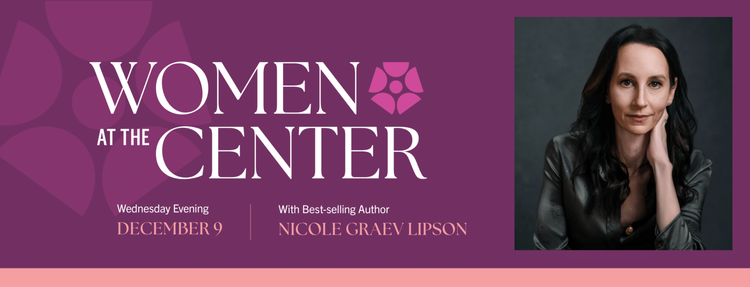
I’ll be participating in three Boston-area events in the coming months that I’m particularly excited about. If you’re local, hope I’ll see you at one! On Wednesday, December 9, I’ll be the featured speaker at The Brookline Center’s annual fundraiser, Women at the Center. The Brookline Center is a wonderful non-profit that provides accessible mental health care for individuals, families, and students in my own community of Brookline, MA, and beyond. This particular event supports a cause close to my heart: the mental health and wellbeing of women and girls. I’ll be joined in conversation by Cloe Axelson, the senior editor of WBUR’s Cognoscenti, to discuss how cultural expectations, competing identities, and everyday sexism impact women’s mental health. (I promise we will laugh, too!). You can learn more and RSVP here.
|
On Sunday, November 1, I’ll be joining Kristi D. Osorio at the very cool Gallery 263 in Cambridge to celebrate her debut memoir The Sound of Burning. Hear Osorio read and pick up a signed copy of her not-to-be-misssed book!
|
Finally, on Saturday, January 16, I’ll be a presenter at the second annual TBR Writing and Publishing Conference at Lesley University in Cambridge. I’ll be leading two sessions: “The Art of the Sentence in Memoir,” where I’ll be going deep into craft and nerding out about things like…syntax! And “Writing About People Ethically and Legally,” where I’ll be in conversation with authors Elizabeth Pryor and Rachel Eliza Griffiths about navigating this complicated creative terrain. There are many wonderful authors on the panel schedule, including Celeste Ng, Rick Moody, Alysia Abbot, Courtney Maum, Paul Harding, Alex Marzano-Lesnevich, Laura Zigman and more! You can check out the full schedule and register for the conference here.
|
|
That’s all for now! I’d love to hear from you. Press REPLY to send a note. Did someone forward you this newsletter? You can sign up for your own free subscription here.
|
|
NICOLE GRAEV LIPSON I’m the author of the memoir in essays Mothers and Other Fictional Characters, a USA Today national bestseller. My writing has appeared in The Sun, Virginia Quarterly Review, Gettysburg Review, LA Review of Books, The Washington Post, and The Boston Globe, among other places. My work has been awarded a Pushcart Prize, shortlisted for a National Magazine Award, and selected for The Best American Essays. I live outside of Boston with my family.
|
|
|
|