|
Welcome to the first edition of my newsletter!͏ ͏ ͏ ͏ ͏ ͏ ͏ ͏ ͏ ͏ ͏ ͏ ͏ ͏ ͏ ͏ ͏ ͏ ͏ ͏ ͏ ͏ ͏ ͏ ͏ ͏ ͏ ͏ ͏ ͏ ͏ ͏ ͏ ͏ ͏ ͏ ͏ ͏ ͏ ͏ ͏ ͏ ͏ ͏ ͏ ͏ ͏ ͏ ͏ ͏ ͏ ͏ ͏ ͏ ͏ ͏ ͏ ͏ ͏ ͏ ͏ ͏ ͏ ͏ ͏ ͏ ͏ ͏ ͏ ͏ ͏ ͏ ͏ ͏ ͏ ͏ ͏ ͏ ͏ ͏ ͏ ͏ ͏ ͏ ͏ ͏ ͏ ͏ ͏ ͏ ͏ ͏ ͏ ͏ ͏ ͏ ͏ ͏ ͏ ͏ ͏ ͏ ͏ ͏ ͏ ͏ ͏ ͏ ͏ ͏ ͏ ͏ ͏ ͏ ͏ ͏ ͏ ͏ ͏ ͏ ͏ ͏ ͏ ͏ ͏ ͏ ͏ ͏ ͏ ͏ ͏ ͏ ͏ ͏ ͏ ͏ ͏ ͏ ͏ ͏ ͏ ͏ ͏ ͏ ͏ ͏ ͏ ͏ ͏ ͏ ͏ ͏ ͏ ͏ ͏ ͏ ͏ ͏ ͏ ͏ ͏ ͏ ͏ ͏ ͏ ͏ ͏ ͏ ͏ ͏ ͏ ͏ ͏ ͏ ͏ ͏ ͏ ͏ ͏ ͏ ͏ ͏ ͏ ͏ ͏ ͏ ͏ ͏ ͏ ͏ ͏ ͏ ͏ ͏ ͏ ͏ ͏ ͏ ͏ ͏ ͏ ͏ ͏ ͏ ͏ ͏ ͏ ͏ ͏ ͏ ͏ ͏ ͏ ͏ ͏ ͏ ͏ ͏ ͏ ͏ ͏ ͏ ͏ ͏ ͏ ͏ ͏ ͏ ͏ ͏ ͏ ͏ ͏ ͏ ͏ ͏ ͏ ͏ ͏ ͏ ͏ ͏ ͏ ͏ ͏ ͏ ͏ ͏ ͏ ͏ ͏ ͏ ͏ ͏ ͏
|
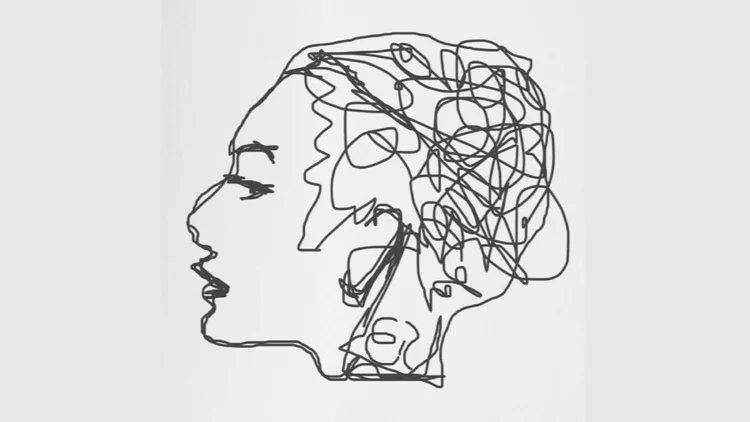
Welcome to the first edition of my newsletter! I’m so glad you’re here. Because this is a new newsletter, I feel like an eager kid burning to explain everything about my vision and hopes for this space. I promise that future editions will be more succinct. Thinkers Who Mother is a newsletter about thinking—and it’s a newsletter about mothering. I’m deeply interested in this pairing because even now, in 2023, it’s sort of weirdly radical. The truth is that our culture has long treated these two spheres—the intellectual and the caregiving—as unrelated, with devastating consequences for women, children, families, nations, and our planet. My newsletter’s title is a play on the former Salon column “Mothers Who Think”. Are any of you old enough, like me, to remember this column? Possibly its name was meant to be a little cheeky. But in distinguishing the thinking mother as something unusual enough to call out, it affirmed the unthinking mother as the norm. Mothers shushed babies, pushed strollers, brushed knots out of hair…but they did not ponder or interrogate or postulate or invent. They did not think. When this column ran, I was in my twenties—single, childless, and thrilled to have landed an editorial job at a New York City publishing house. Eating lunch at my desk, I’d sometimes scroll through Salon, passing over “Mothers Who Think” as irrelevant to me. As a young adult woman whose greatest passions were books and writing, I had no trouble at all conceiving of myself as a thinker. I’d been encouraged my whole life—by my parents, in high school, in college—to be a thinker. And, of course, I’d been encouraged to be a mother, in all the ways girls are groomed to become mothers. But at no time had I been encouraged to see the nurturing of others as a cerebral or creative undertaking. As far as I was concerned, mothers operated outside the world of ideas and rigor and power, in a sealed, pastel kingdom of mobiles and lullabies. I might one day become a mother, sure. But for the time being, the mother in me waited deep in my cells, a tangle of instinct and urge that would eventually kick in—presumably around age 30?—replacing the thinking me with something more elemental. What startled me most in the days and weeks after I gave birth to my first child wasn't how utterly I’d been transformed, but how very much I was still me, full of the same preoccupations and foibles I’d always had. Were I to have relied on “instinct” alone to keep my daughter alive, I would have failed. And as my children have turned from infants to preschoolers to elementary schoolers—and in the case of my oldest, a teenager—instinct has become an even less reliable guide. Caring for children is often treated as a sort of side gig, something that takes place in the antechambers of real life. But to be a mother (or a father, or devoted aunt or uncle or grandparent, or caregiver to aging parents) is to be propelled, daily, into the middle of the most pressing and complex questions humans face—about morality, identity, integrity, justice, and community; about what it means to be a good person, citizen, and custodian of our earth; about how to live and how to love. These questions fueled me in the four years I spent writing my memoir-in-essays Mothers and Other Fictional Characters (forthcoming from PA Press/ Chronicle Books in early 2025!). But one of the limitations of writing a book is that there’s always more to be explored, more research to pursue, more perspectives to invite in. I’m excited to use this space to continue the conversation about thinking and mothering, and to amplify the voices of other artists for whom creativity and care work are deeply entwined. I hope you enjoy what’s to come! —Nicole
|
|
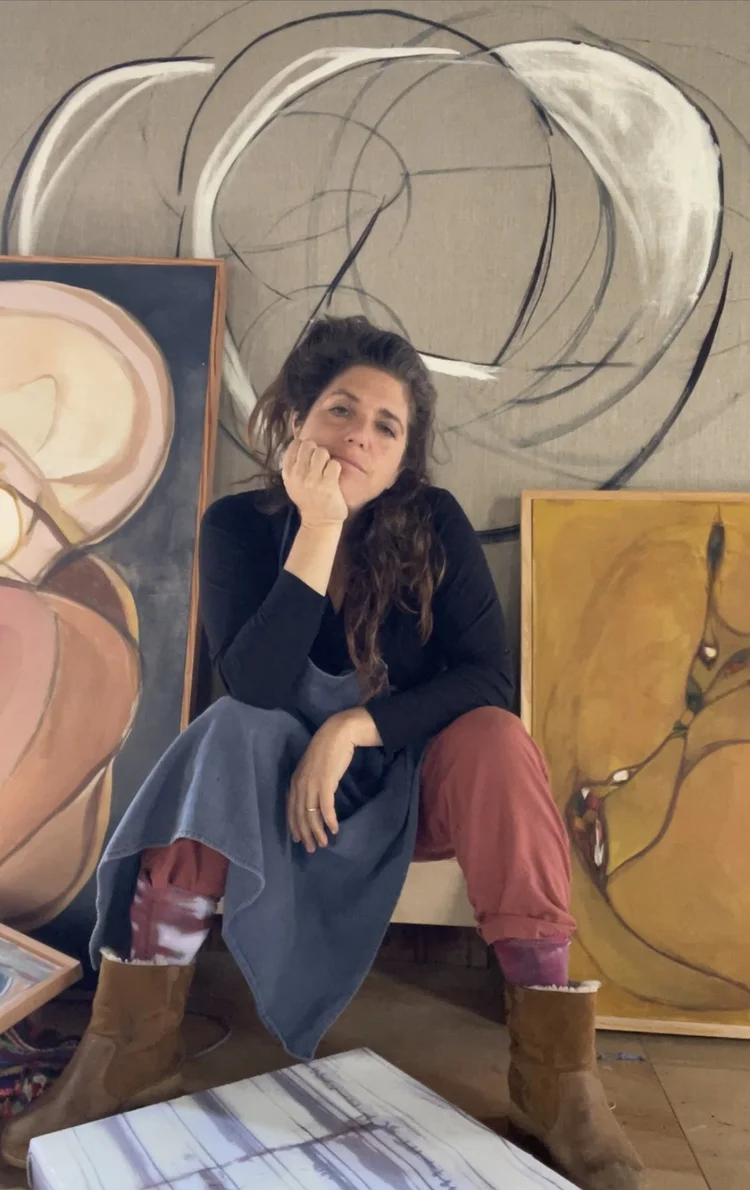
For my first Thinker Spotlight I could not be more thrilled to be turning my attention to the incredible Eva Zasloff. I first met Dr. Eva Zasloff in 2020, while researching a Boston Globe Magazine cover story about becoming a new mother in the early months of the pandemic. Trained in both pediatrics and women’s health, Zasloff is the founder of Tova Health and provides integrative care to postpartum mothers and their newborns together, in the comfort and safety of their own homes. I had the privilege of shadowing Zasloff on several of her home visits, and I was moved by her compassionate recognition of the physical and psychological challenges so many new mothers experience—challenges far too often minimized or ignored. As I observed her at work, honoring the intricate symbiosis of newborn and parent, I couldn't help but wish that she had been my physician when I was a new mother, exhausted and still-bleeding as I hauled my daughter’s bucket carseat into her pediatrician’s office four days after birthing her, as the traditional siloed model of newborn care requires. Here’s the incredible thing about Zasloff (or the second incredible thing!). Not only is she a devoted physician who developed a boundary-breaking model of fourth trimester care. She’s also a gorgeous visual artist whose paintings illuminate her deep thinking about motherhood—both as a caregiver to new mothers and infants, and as a mother of three sons herself. When I first visited her Arlington, MA, studio—an airy barn on what happens to be part of the oldest continuously operating mill in the U.S!—I fell in love with her Mother Series paintings, whose striking forms call to mind the movements and shapes of one human body tending to another. I’m now the proud owner of two these paintings, and every time I pass them on my stairwell, they fill me with happy calm and remind me of all the ways the mind and body converge in the act of caregiving. Last month, Zasloff curated a group exhibition at her studio, “In the Fourth Trimester,” featuring work by artists exploring this complex liminal period. “The reverence with which these artists treat this transitional time calls attention to how easily our society shrugs it off, and helps us envision better physical, soulful care,” wrote Cate McQuaid in this review of the show in The Boston Globe.
|
|
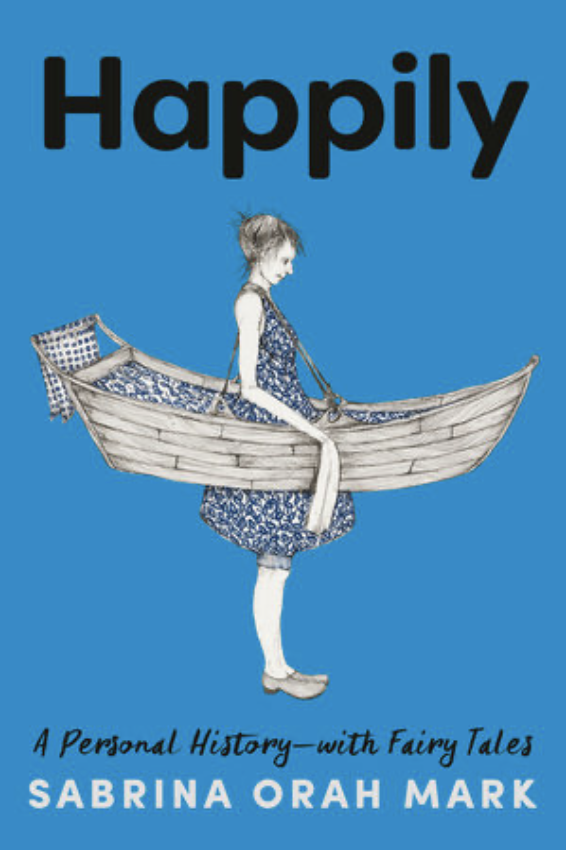
We turn to fairy tales not to escape but to go deeper into a terrain we’ve inherited, the vast and muddy terrain of the human psyche. Fairy tales, like glass coffins, like magic mirrors, give transparency to the reflection of the human gaze. One of my favorite recent reads was Sabrina Orah Mark’s luminous memoir-in-essays Happily: A Personal History—With Fairy Tales. I first discovered Mark when I happened upon this great interview with her on Can We Talk?, the podcast of the Jewish Women’s Archive. I then began reading her dreamy Paris Review column, Happily, which explores themes of motherhood, stepmotherhood, womanhood, marriage, home, history, memory, and race through the clarifying prism of traditional folklore. Mark writes poetry and fiction as well as nonfiction, and Happily merges elements of all three, defying traditional boundaries of genre in way I found destabilizing in the most pleasurable way. I had the honor of interviewing Mark for the The Millions where I spoke with her about the allure of the sonnet, the ethics of writing about one’s children, the connection between Torah stories and fairy tales, and much more. You can read our conversation here! More Recommended Reads Here are a few more books I’ve enjoyed recently: Easy Beauty by Chloe Cooper Jones I was utterly floored by this moving and absorbing memoir—just named a 2023 Pulitzer Prize finalist—about motherhood, disability, and who gets to define what it means to be beautiful. Wanting: Women Writing about Desire, edited by Margot Kahn and Kelly McMasters This anthology is a treasure trove of writing about female longing. I loved reading new essays by some of my favorite authors, like Melissa Febos, Joanna Rakoff, and Abigail Thomas, as well as discovering gorgeous writers entirely new to me, like Terese Svoboda and Jane Wong. To hear me rave about this book in more detail, check out my recent review in Chicago Review of Books. Circe by Madeline Miller Miller’s reimagining of The Odyssey from Circe’s perspective has been in my TBR (To Be Read) pile a while, and it was my 10-year-old son, of all people, who finally moved it to the top. His teacher recently mentioned it during his class’s unit on mythology, and he chose it the first selection in our two-person “mother-son book club”, which is my kind of book club because it basically consists of snuggling with my kid as we read in his bed. I’ve been awed by Miller’s lucid dreamlike sentences, and my son loves the intrigue and the thunderbolts.
|
|
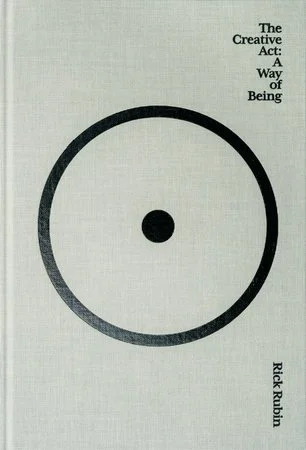
After spending the last few years of my life deeply and obsessively absorbed in writing Mothers and Other Fictional Characters, I’m finding myself in a sort of creative intermission as I think about my next book project. I have a seed of an idea, but it’s a small and flimsy and kind of weird seed: I can’t yet tell what it will grow into—if anything at all. This is kind of a torturous state for me to be in. I like doing, progressing, watching words accrue. I like knowing that the thoughts I’m spending my irretrievable time on will amount to something. Sometimes, I imagine that if I can just will my mind to think harder and deeper— now!—the entire creative whole will suddenly fall into place. I’m currently listening to the audiobook of The Creative Act: A Way of Being, a meditation on the process of art-making by Rick Rubin (yes, that Rick Rubin, the one who founded Def Jam Records and produced the Beastie Boys and Run-DMC). This morning, as I was walking my dog Lyle with my earbuds in, Rubin said something that made me (and Lyle) stop in our tracks: “Impatience is an argument with reality.” Holy crap, I thought. This simple sentence contained everything I needed to begin to feel sort of kind of okay about being in this fallow creative phase, with nothing but a flimsy seed to show for myself. As a parent, I thought to myself, I would never urge my children to just hurry up and become who you’re going to be already! To do so would not only be to argue absurdly with reality, but to absolutely miss what it means to witness and nourish the slow, mysterious becoming of another human. And so for now, I’ve resolved to hold my peculiar mystery seed up to the light, to learn the feel of it between my fingers, to give it air and water and sunlight and to wait—as patiently as possible—for it to tell me what it is it wants to become.
|
|
Before I go, here are a few more things that have made me think—in the best of ways—in the past month: In this Literary Hub interview about her new book Soil: The Story of a Black Mother’s Garden, poet and memoirist Camille T. Dungy asks, “Who are the artists we haven’t heard from…because of cultural constructs that suggest that true and worthy art separates itself from the quotidian aspects of domestic life?” Amy Monticello and Jill Kolongowski also ponder this theme in their inspiring Assay piece about the stories buried in the most mundane parts of our days. Especially for historically marginalized writers, they point out, “honoring the quotidian allows us to honor the parts of our lives…that have been deemed unworthy of contemplation.” Book publishing has long favored younger writers (all those dispiriting 30 under 30 lists!), and this has especially been true for women writers. But according to this article in The Guardian, “older, unpublished writers are now at a premium—with radical, edgy women aged into their 80s particularly sought-after.” Umm…hell yes! That’s all I can say about that. Poet and father Matthew Lippman’s new poem, “Something Could Come of It Called Everything”, recently published in A Gathering of The Tribes, is an edgy and urgent prayer for a softer world. Opening line: “What does it mean to be fucked in a good way?” How’s that for a teaser!
|
|
I’d love to hear what you’ve been reading and thinking about lately, or what you’d be interested in seeing featured here! And feel free to forward this to others who might enjoy it. Did someone forward you this newsletter? You can sign up for your own subscription here.
|
|
NICOLE GRAEV LIPSON I’m the author of the memoir-in-essays Mothers and Other Fictional Characters, coming in early 2025. My essays have appeared or are forthcoming in The Sun, Virginia Quarterly Review, Gettysburg Review, Creative Nonfiction, The Washington Post, and The Boston Globe, among other places. My writing has been awarded a Pushcart Prize and been shortlisted in The Best American Essays.
|
|
|
|